Bedding materials guide
Obasan and Naturepedic: Comparing Materials in Protective Bedding
A mattress layer can be as simple as a breathable cotton cover or as specialized as a fitted pad with a waterproof barrier. Obasan and Naturepedic illustrate two approaches to protection, with choices that include organic cotton, wool, and layered waterproof constructions. Understanding the differences can help you choose a layer that fits your mattress, care routine, and need for moisture protection.
Published November 15, 2026
First, decide what “protection” needs to mean
Mattress pads and protectors are often grouped together, but they do not all do the same job. Some add a little cushioning and absorb everyday perspiration; others are designed chiefly to limit the transfer of liquids to the mattress. A wool layer may offer a naturally absorbent, moisture-managing surface, while a waterproof protector uses a separate barrier to stop spills from passing through. A cotton cover, meanwhile, can provide a soft, washable layer without necessarily being waterproof.
That distinction matters because a bed layer has to balance several things at once: the feel of the surface, the amount of protection needed, how it fits the mattress, and whether its care instructions suit the household. A pad that is comfortable but difficult to maintain may not be a practical everyday choice. A waterproof design may be useful for spills, but the construction and added layer can feel different from an uncoated natural-fiber cover.
Obasan and Naturepedic offer useful examples of these differing priorities. Obasan’s bedding options represented here include organic cotton covers and a wool moisture pad. Naturepedic’s waterproof options use cotton layers around a thin waterproof membrane. These are not simply two versions of one product: their materials and construction point to different uses.
Organic cotton: a soft, breathable layer
Cotton is familiar for good reason. It is a plant-based fiber used in bedding for its soft hand, straightforward everyday appeal, and ability to form a breathable fabric. In a mattress pad or protector, cotton may be the surface that sits closest to the sheet, the fabric surrounding a fill, or part of a multi-layer construction. What it can do depends on how it is woven, quilted, finished, and combined with other materials.
Obasan’s organic cotton mattress pad protector is described as a stretchy, breathable cover made with GOTS-certified organic cotton. It is intended to absorb body moisture and protect the bed, and it can be customized to fit mattresses up to 12 inches thick. Its care directions call for machine washing in warm water and drying on medium heat. The fabric’s stretch is part of its fit: after drying, the instructions recommend placing it on the mattress and pulling from the corners to loosen the cover.
That kind of cotton protector may suit someone who wants a fabric layer and routine washability but does not need a waterproof barrier. It is important not to read “protector” as a promise of spill-proof performance. A cotton cover can help absorb everyday moisture, yet it is not equivalent to a product specifically constructed to prevent liquid from reaching the mattress.
For a cotton option with a different purpose, see the Obasan Organic Cotton Pad Protector. Its listed characteristics include stretch, breathable fabric, mattress-depth customization, and machine-wash care. As with any fitted layer, check the depth and size against your mattress before deciding whether it will work for your bed.
Organic certification can also help a reader understand how a material was produced and assessed, but a certification is not a performance guarantee. It does not tell you by itself whether a pad is waterproof, how plush it feels, or whether it will fit a particularly deep mattress. For a more complete picture, look at the fiber, construction, fit, care directions, and the specific protection being claimed.
Wool: moisture management without a waterproof membrane
Wool takes a different route from cotton. It is a natural fiber often used in bedding for its spring and its ability to take up moisture. That can make a wool layer appealing to sleepers who want a cushioned, moisture-managing surface. But wool’s moisture-handling properties should not be confused with a waterproof barrier: a water-resistant or absorbent layer is not automatically designed to block liquid completely.
The Obasan Organic Wool Moisture Pad Protector is described as made from pure, GOTS-certified organic wool, with elastic straps to help hold it in place. Its stated purpose is to offer water resistance and protect the mattress. The care routine is notably different from the cotton pad: the wool pad can be aired outside as needed and hand washed in cold water, or machine washed on a gentle cold cycle. The instructions say to hang it indoors to dry and not to put it in a dryer.
Those directions are a practical reminder that “natural” does not always mean “low maintenance.” Wool can be a good fit for someone comfortable with gentler handling and slower drying, but it may be less convenient for a household that expects to put every bedding layer through a standard machine-wash-and-dry cycle. Follow the label rather than assuming all wool pads tolerate the same treatment; fiber content, construction, and manufacturer guidance vary.
Wool’s role is also different from that of an impermeable protector. It can help manage moisture at the sleep surface and provide a natural-fiber layer, but it is not the same kind of defense as a membrane designed to stop spills from passing through. If the primary concern is an accident or a larger spill, look for explicit waterproof claims and confirm how the product is constructed.
For details on the wool option, consult the Obasan Organic Wool Moisture Pad Protector. Its fit uses elastic straps rather than a fitted skirt, and its listed care is more delicate than the machine-washable cotton option. That difference may be just as important to the decision as the fiber itself.
Waterproof construction: cotton on the outside, a barrier inside
Naturepedic’s waterproof mattress protector illustrates a layered approach. According to its description, it uses two layers of organic cotton jersey with a thin waterproof membrane between them. The cotton provides the fabric surface, while the hidden inner layer is what creates the liquid barrier. This means the protector’s feel and function come from the whole construction, not from cotton alone.
A thin barrier can make a protector more useful where spills, leaks, or other accidents are a realistic concern. The specific Naturepedic protector described for standard mattresses is a fitted style with elastic around the edge and is listed for mattress depths from 9 to 16 inches. Its care information says it can be machine washed and dried. Those practical details are worth checking closely: mattress depth is not the same as mattress size, and a protector that does not fit securely may shift or pull during use.
Waterproofing is not a single material category. Products may use different membranes and cover fabrics, and their construction can affect their sound, stretch, breathability, and feel under a sheet. Naturepedic describes its membrane as thin and the protector as quiet, while also noting that the design blocks liquids and allows some water vapor to escape. These are product-specific characteristics, not guarantees that every waterproof cover will feel the same.
A waterproof protector is not necessarily intended to add plushness. If a thicker, softer sleep surface is the priority, that is a separate question from whether the mattress needs a liquid barrier. Many households use a protector as the first defensive layer and then add a fitted sheet; others may choose an absorbent pad, depending on the need and the manufacturer’s guidance about layering.
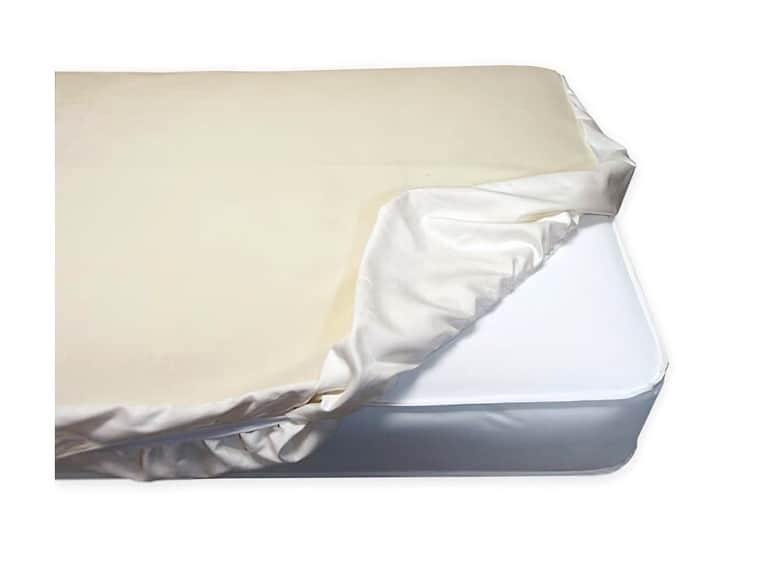
Naturepedic also offers a fitted waterproof crib mattress pad made with organic cotton flannel on top, organic cotton muslin on the bottom, and a thin waterproof layer between them. It is listed at 28 by 52 inches and is designed for a crib mattress. The product is machine washable and dryable, according to its description. Its intended size and use are specific, so it should not be treated as a substitute for an adult mattress protector or used on an incompatible sleep surface.
See the Naturepedic Waterproof Organic Cotton Crib Mattress Pad – Fitted for its construction and care details. The key comparison with Obasan’s cotton and wool protectors is not that one brand is universally better, but that the products address different levels and types of moisture protection.
A practical comparison of materials and care
| Layer type | Typical role | Moisture approach | Care point to check |
|---|---|---|---|
| Organic cotton cover | A breathable fabric layer that may absorb everyday moisture | Absorption; not necessarily waterproof | Wash temperature, drying method, and mattress-depth fit |
| Wool moisture pad | A natural-fiber layer that can help manage moisture | Moisture handling or water resistance, depending on the design | Gentle washing, air-drying requirements, and whether tumble drying is prohibited |
| Cotton with a waterproof membrane | A washable surface with a barrier intended to block liquid | Barrier protection rather than absorption alone | Fit, washing instructions, and permitted drying temperature |
This comparison is a starting point, not a substitute for the care label or product specifications. Even two cotton protectors can differ: one may be a stretchy fabric cover, while another may enclose a membrane. Likewise, wool products differ in thickness, attachment, and washing requirements. The name of a fiber helps identify the material but does not tell the whole story.
How to choose for your bed and household
Begin with the problem you are trying to solve. If the concern is everyday perspiration and you mainly want a breathable fabric layer, a cotton protector may be enough. If you prefer wool and are comfortable following gentler care instructions, a wool moisture pad may be worth considering. If spills need to be stopped before they reach the mattress, seek a product that explicitly describes a waterproof barrier.
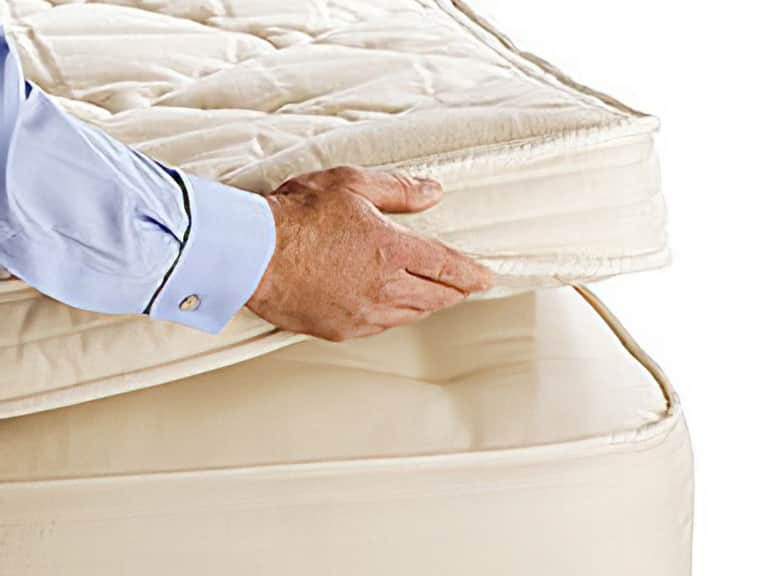
Next, measure the mattress. Confirm the width and length, but do not stop there: depth can determine whether the corners stay in place. Mattress toppers, pillow tops, and deep mattresses may need a larger pocket or a particular fit. Check whether a product uses an elasticized skirt, corner straps, or another attachment system, and compare that construction with the mattress you have.
Then think about laundry. A machine-washable layer can make regular upkeep simpler, but “machine washable” does not mean all cycles and temperatures are suitable. Wool may need cold water and indoor air-drying, while cotton or waterproof products may have their own restrictions. High heat, bleach, or fabric softener can be unsuitable for some materials and may affect performance. Read and retain the care instructions before the first wash.
Finally, consider how the layer will feel beneath a sheet. A thin protector is typically chosen to preserve the mattress’s existing feel, while a quilted or filled pad may add more cushioning. Waterproof construction can be quiet and flexible, but the overall sensation depends on fabric, membrane, quilting, and fit. If maintaining the mattress’s original feel is important, prioritize descriptions of thickness and construction, not just the word “protective.”
Layering without confusion
In a simple bedding setup, the mattress sits at the bottom, a protector or pad goes over it, and the fitted sheet covers the top. That arrangement helps keep the protective layer in place and gives the sleeper a washable surface. Some people layer an absorbent pad over a waterproof protector, but before doing so, check the instructions for both products and make sure the combined thickness does not compromise the fit of the fitted sheet.
More layers do not automatically mean better protection. Each additional layer can change the feel, affect airflow, and complicate laundering. A waterproof protector may be enough for spill prevention; adding a wool or cotton pad may provide a different surface feel, but it also creates another item to maintain. Choose the fewest layers that meet the household’s needs comfortably and safely.
For crib bedding in particular, use only products designed for the crib mattress and follow the mattress and pad manufacturers’ instructions. Confirm that the fitted pad fits securely and that any bedding used is appropriate for the child’s sleep setting. A product’s natural fibers or waterproof performance do not override safe-fit requirements.
What the comparison does—and does not—say
Obasan and Naturepedic show how the same broad goal—protecting a mattress—can lead to different material choices. Obasan’s cotton cover emphasizes a breathable, stretchy textile layer, while its wool moisture pad uses a natural fiber and a more delicate care routine. Naturepedic’s waterproof construction combines cotton fabric with an inner membrane to create a barrier against liquids. Their products should be compared by function and construction, rather than by brand name alone.
No single material is automatically ideal for every sleeper or household. Cotton may appeal for its familiar softness and washability, but it does not become waterproof simply because it is organic. Wool may help manage moisture, but it still requires careful cleaning and is not interchangeable with a waterproof membrane. A waterproof design can guard against spills, but its fit, care needs, and feel deserve attention too.
Descriptions also cannot answer every question about long-term performance in a particular home. A mattress’s depth, the frequency of washing, the kind of spills expected, and personal preferences all matter. When a detail is essential—such as whether a protector fits a specific mattress height or tolerates a particular dryer setting—check the current manufacturer information rather than assuming all products in a material category behave alike.
A clear choice starts with the care label
The most useful distinction is straightforward: cotton and wool offer natural-fiber surfaces with different moisture and care characteristics, while a waterproof protector relies on an added barrier to stop liquids from passing through. Obasan’s organic cotton and wool options show how two natural materials can serve different preferences; Naturepedic’s layered protector shows how cotton can be combined with a waterproof membrane.
Before settling on a layer, match its purpose to your actual need. Check whether you want cushioning, everyday moisture absorption, water resistance, or waterproof protection. Verify mattress dimensions and depth. Read the wash and drying directions, especially if a product contains wool or a membrane. Those small checks can prevent a mismatch between the promise you expect and the protection the construction is designed to provide.
Protective bedding works best when it is suited to the bed beneath it and realistic to care for over time. With the material, fit, and maintenance routine considered together, it becomes easier to choose a layer that supports a clean, comfortable sleep surface without expecting one product to do everything.
Quick takeaways
- Organic cotton can provide a breathable, washable surface, but cotton alone does not mean waterproof.
- Wool can help manage moisture, yet it commonly requires more careful washing and drying than a standard cotton layer.
- A waterproof protector uses a barrier, often between fabric layers, to limit liquid passing through.
- Compare fit, mattress depth, attachment style, and care instructions—not just the material name.
- Choose a layer for the protection and feel you actually need, and follow the manufacturer’s current instructions.